

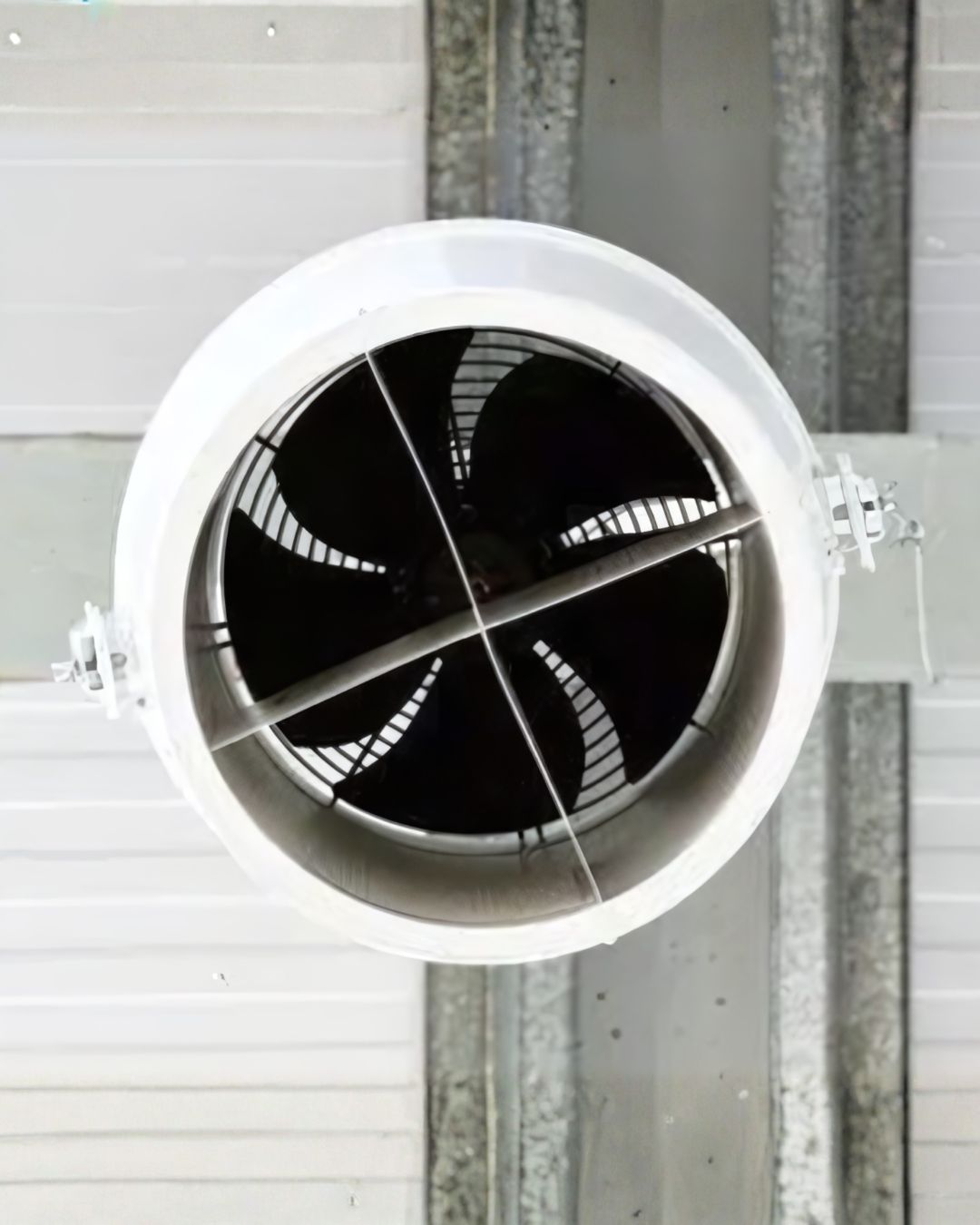
In a building with a large open space, such as a warehouse, hall or auditorium with a roof height of four metres or more, the air will stratify (unless you have an Air Handling Unit), which means all the hot air will get stuck in the roof space.
Heating this space without using destratification fans will mean your heating bills are much higher than they should be. Installing these bucket-like, variable speed destratification fans strategically in large open spaces will mix the air to provide a constant temperature and air quality.
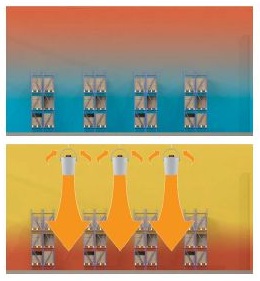
The top diagram shows an example of a warehouse where air has stratified.
Modern destratification fans work by pushing the hot air stuck in the roof space down to ground level, as shown on the bottom diagram.
Each fan has a temperature sensor attached to the fan air intake so that the temperature of the air passing into the fan can be measured. Another sensor, or group of sensors, is installed at ground level.
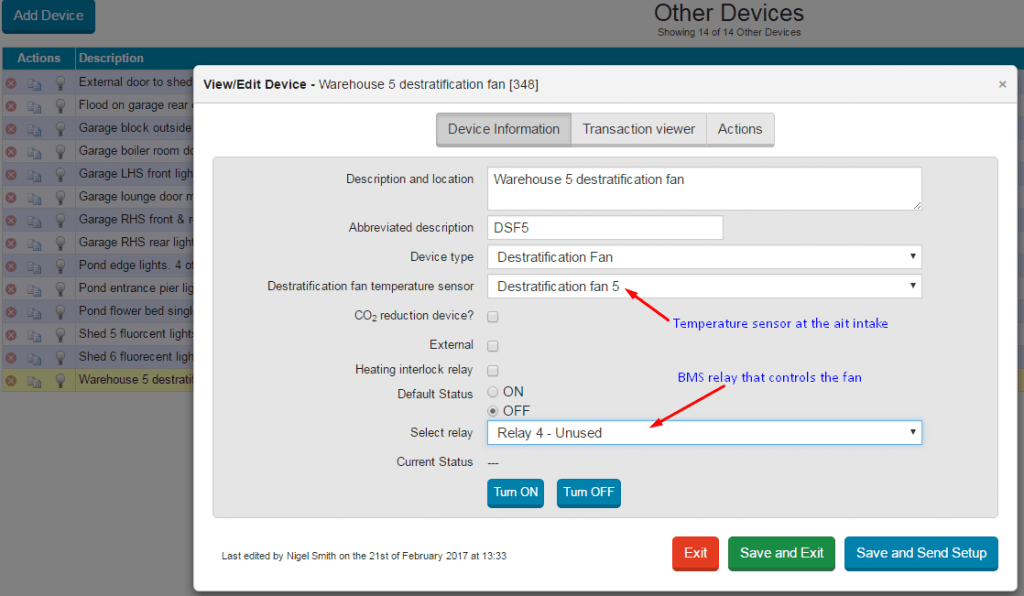
This screenshot shows a typical fan setup on a BEMS system (HeatingSave used in this example). The BEMS system needs to know the temperature sensor associated with the fan and the BEMS relay that controls the fan.
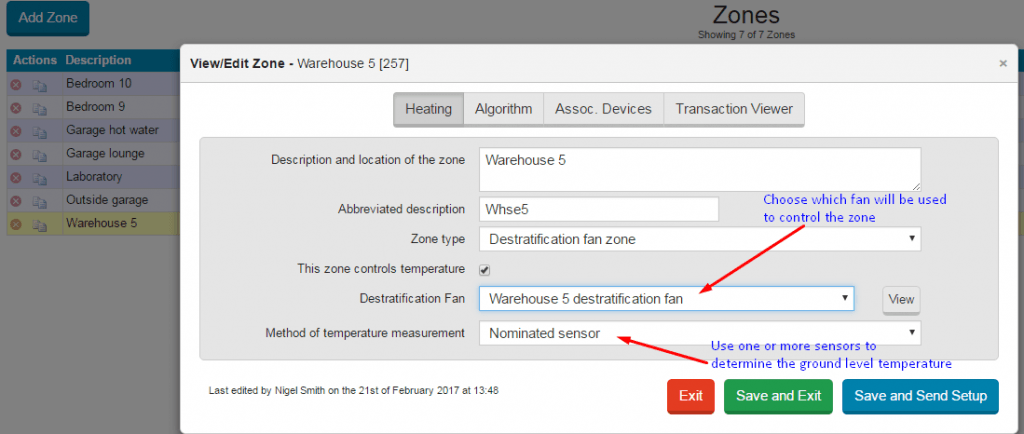
The BEMS system will then create a destratification zone for each fan or set of fans and assign the fan and sensors to this zone, as shown above.
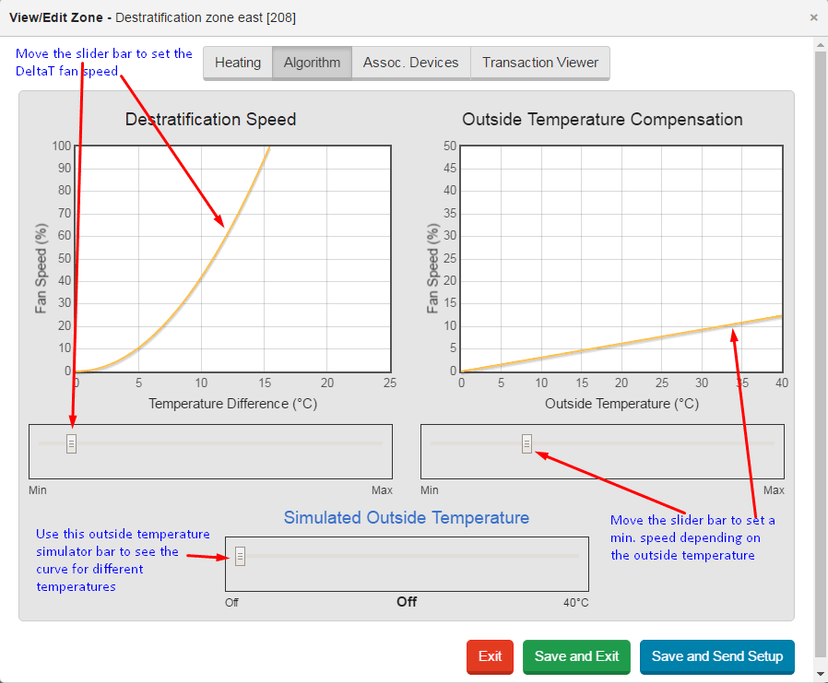
The BMS then allows you the trim the settings with slider bars for DeltaT and a compensation for use in hot weather to provide a minimum fan speed to cool everyone.