Types of heating systems

Following our blog about central heating throughout history, in the present there are a wide range of options for heating systems for all kinds of properties — here is a look at some of the different types of both central and non-central heating.

Non-central heating

In the 2021 Census, only 1.48% of homes in England and Wales did not use any form of central heating.

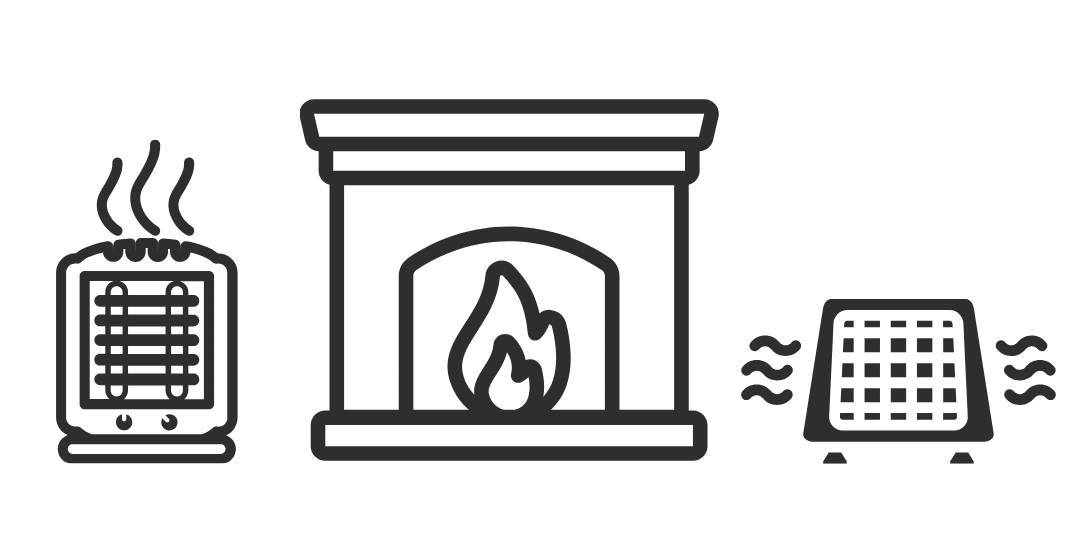
Non-central forms of heating only warm the area around the heater, offering a flexibility that central heating does not. Traditionally this meant fireplaces and stoves, which are of course still in use today, usually in older properties (and can be a much more visually appealing form of heating!).

More modern alternatives include electric storage heaters, which are heated by electricity and are designed to absorb and store energy on internal bricks, often made from clay, which then release the heat. The benefit of this is that they can be switched on during off-peak energy hours to store the heat, then switched off to discharge it during the higher tariff daytime.

Electric heaters, such as infrared or convection heaters, are popular because they can be set up easily, thereby providing heat to a specific room extremely quickly. Portable heaters of differing types are also popular, from glass panel heaters and fan heaters to oil-filled radiators and space heaters, and many of them can also double as a cooling unit during the warmer months.

However, electric and portable heaters can use a large amount of electricity or gas to power, and as such are not considered particularly cost-efficient. Care must also be taken when setting them up to ensure they are safely kept away from anything potentially flammable.
District heating

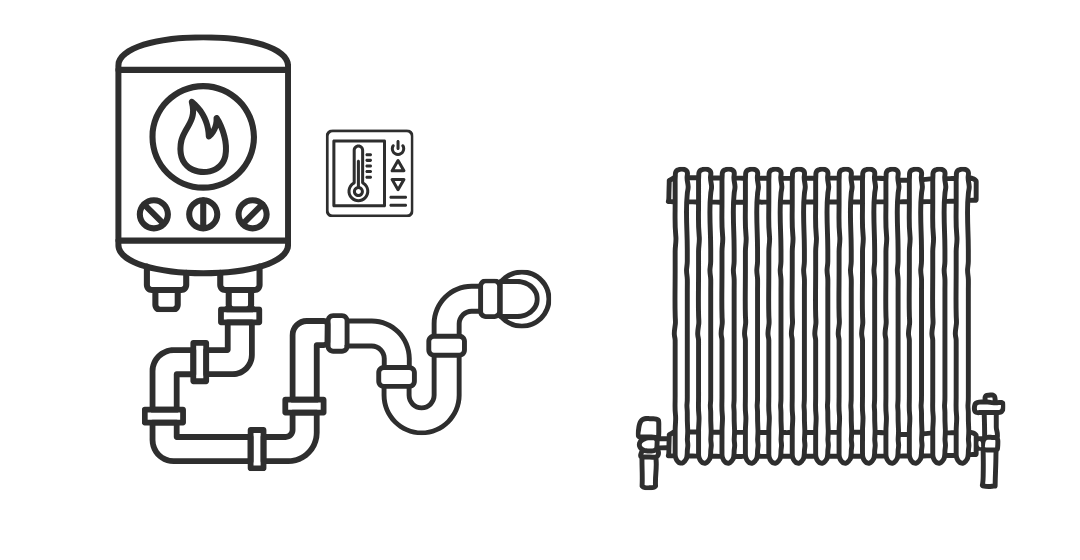
District heating is far less common than central heating, but the Energy Saving Trust reports that it generates about 2% of the UK's heat. District heating relies on a central energy centre which delivers hot water through a network of pipes to multiple properties (up to thousands) of different types, each of which has its own control unit for heating and hot water. It is considered cost-effective and low-carbon, and the UK Government is enthusiastic enough about this type of heat network that a fund has been set up for the creation and expansion of them (the Green Heat Network Fund) in an attempt to have 20% of the UK's heat provided by them by 2050.

Central heating

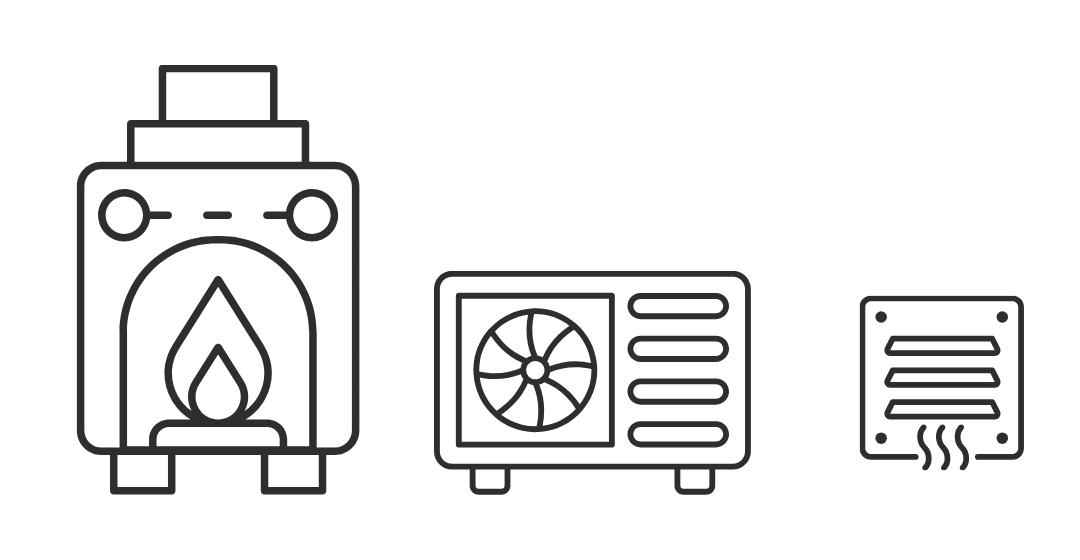
A central heating system uses one heat source to provide heating for a property. With a central heating system, air, steam or (most commonly) water is heated by a boiler, furnace or heat pump, and is circulated around the property to air vents or radiators. The main benefit of a central heating system is that it provides a single point of control for a building's heating, which can then be managed on a room-by-room (or zone-by-zone) basis if required. However, it does require pipes (or air ducts) to be fitted throughout the property, as well as the radiators or vents themselves.

The most common method of generating heat for central heating is through burning gas, coal, wood or another source; in England and Wales gas is by far the most widely used fuel — the 2021 census notes that nearly three-quarters of households in England and Wales solely use gas central heating.

Wet central heating

When a central heating system uses water, rather than steam or air, to transfer heat around the property it is known as a wet central heating system. A wet heating system generally requires less maintenance than other forms of central heating, provided it is well-maintained.

Historically, the most common form of wet central heating involved a water tank storing the water (usually in a loft or attic space) before it is heated by a boiler, then kept in a hot water cylinder before being distributed throughout the property as necessary. However, this is no longer considered the ideal system due to the time it takes to heat the water, and then the heat loss that occurs as the water moves into the hot water cylinder. It can provide the benefit of an airing cupboard, though — provided the hot water cylinder is in a convenient location.

The most popular central heating type is now the combination boiler (or combi boiler), which is fed directly from mains water, negating the need for a separate hot water tank. A combi boiler can heat water extremely quickly using an electric heating element (usually powered by mains electricity), allowing the central heating system to provide heat when it's needed for radiators, underfloor heating or hot water taps.

Combi boiler fuel types include gas, oil, Liquefied Petroleum Gas (LPG), and electricity.

Natural gas combi boilers are the most common, as it is the most convenient and cost-effective option, being supplied by the national gas grid. Gas is generally considered cleaner than coal and oil, and modern combi boilers have condensing technology which reduces the CO2 released and makes them more energy efficient.

Similarly, modern combi boilers fuelled with heating oil also include condensing technology, and can be a cost-effective alternative for properties that don't have access to the national grid. However, they do require storage and manual replenishment of the oil in an external tank.

A slightly cheaper and greener option is an LPG boiler fuelled by Liquefied Petroleum Gas, which also requires external storage and purchasing of refills, but otherwise works in the same way as a grid-fed gas boiler.

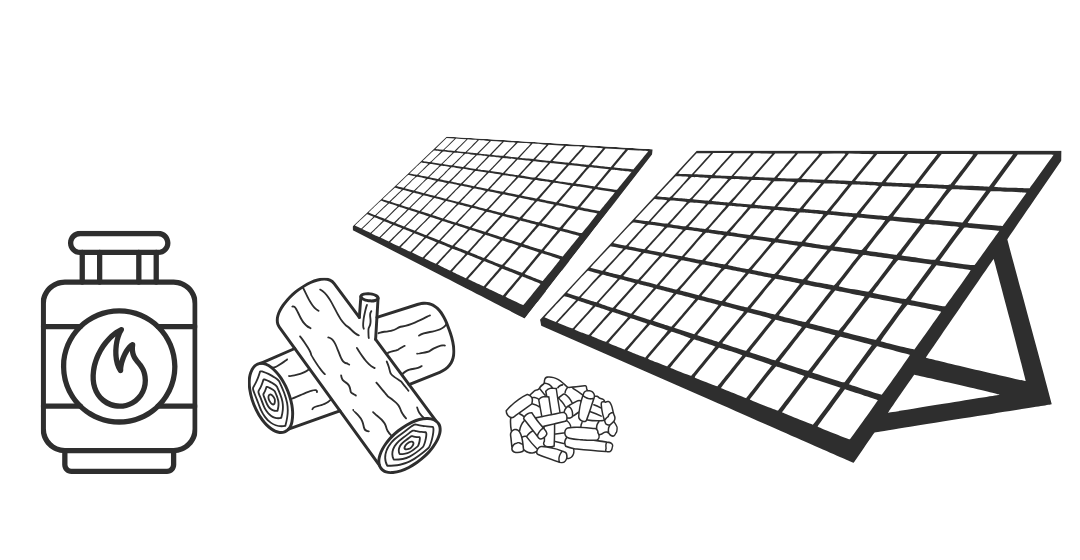
Another alternative could be a biomass boiler, which burn organic materials to produce heat, making them a more sustainable type of central heating. Like oil and LPG boilers, biomass boilers require a storage tank to be refilled when necessary. The most common type of fuel is wood-based — logs, pellets and chips — but other biomass can be used, such as agricultural by-products like straw and grain.

For the greatest energy-efficiency, however, an electric combi boiler is the best option, as they don't release CO2 or waste energy through heat loss — particularly when they use renewable energy as a source. The downside to an electric boiler is that electricity is generally quite a bit more expensive than gas, and the power output is lower than other fuel types, meaning electric combi boilers are typically more suitable for smaller properties.

Dry central heating

Wet central heating has become the most common type of heating in the UK over the last several decades, but dry central heating, where warm air is pumped through ducting had been used extensively until around the 1970s, and is still the most common form of central heating system in the USA. For UK properties it is more efficient for wet heating systems to be used, especially for properties connected to mains gas, water and electricity; there are much more remote buildings in America without access to the grid(s), and the combined heating/cooling of a duct system is more appropriate for their colder winters and hotter summers.

Dry central heating is making a comeback in the UK thanks to air source heat pumps, which can be highly effective in well-insulated properties, and work a little bit like a reverse air conditioner. They transfer heat from the air and push it out into the duct or pipe system, and can be quieter, more energy efficient, and more environmentally friendly.

However, a sizeable disadvantage of warm air central heating is that they do not heat water and require a separate hot water cylinder installed on the property. Older systems might even need a separate water heater, or a boiler might still be necessary for providing hot water. They can also be expensive to install, particularly in an existing property due to the need for extensive ducting, and small objects can become stuck in the vents or ducts, restricting the air flow or rattling around.

Solar (or photovoltaic) panels and solar thermal systems have also become a popular method of heating, albeit usually in a more supplementary role to support one of the above methods as the primary form of heating. They both employ panels, usually installed on a property's roof, to use the sun's heat to generate energy, which is used in different ways. Solar PV panels can be connected to a battery to store electricity, which can then be used to supplement (or replace, if enough power is generated) the national grid supply for everyday use — including to power a boiler or other heating appliance. Solar thermal panels are a more direct method of heating, as they contain liquid which heats water in a storage cylinder, which can then be piped through the property for heating as desired. Both solar thermal and solar PV systems can help to reduce bills, cut running costs and even earn you money; however, while solar PV panels can still collect energy on overcast days, both options will likely require support from other methods of heat generation like those above.

Whatever your type of central heating — and even if you have multiple types — HeatingSave can manage your system and ensure that it is as cost-effective and energy efficient as possible. By integrating with both new and existing systems, HeatingSave provides advanced control over your heating to reduce energy consumption and wastage. Find out more at heatingsave.co.uk/business/business-products/building-management-systems/control-building-heating-system.